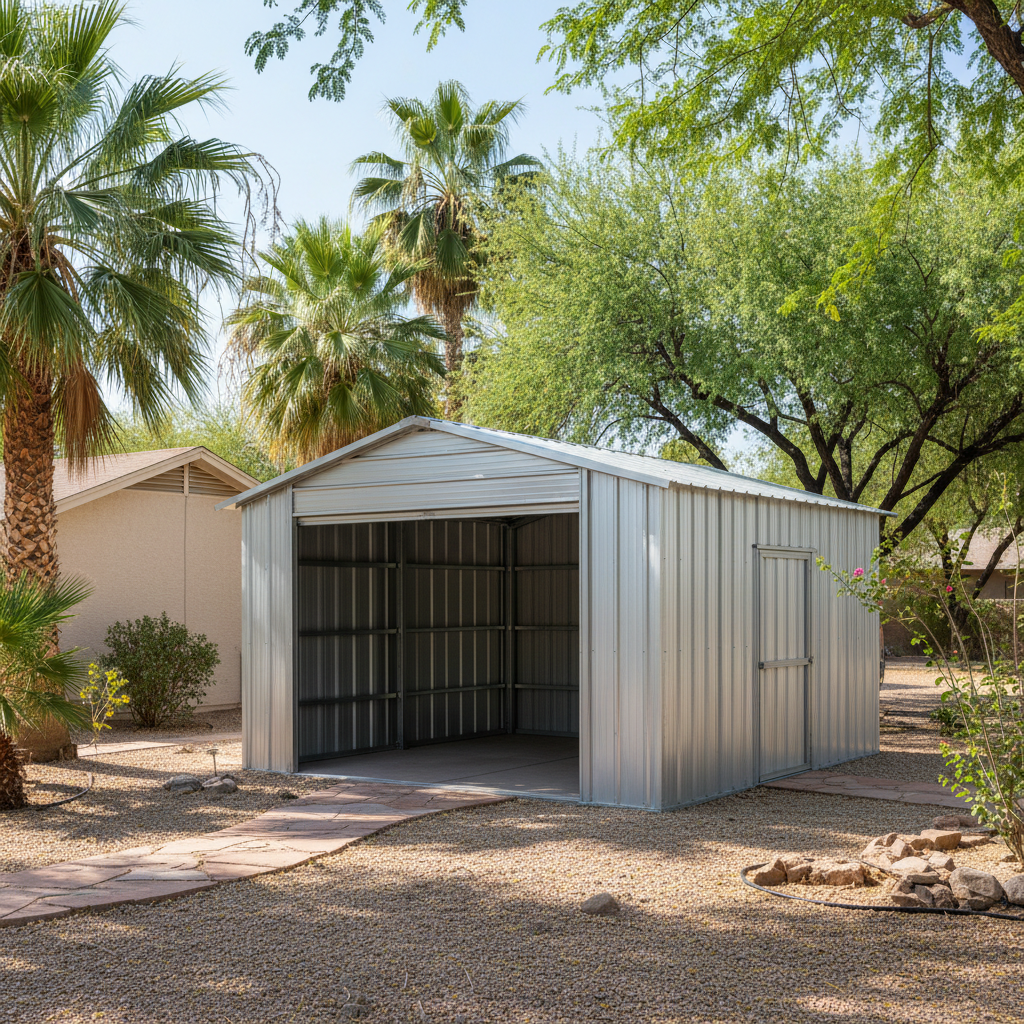
So, you've got a metal frame shed, or maybe you're thinking about getting one. That's a smart move for Mesa, honestly. They're tough, they last forever, and they give you that extra space you always seem to need. But just like everything else around here, our crazy desert climate means you can't just put it up and forget about it. You really need to think about the seasons, both for when you build and how you keep it in top shape.
When's the Best Time to Build or Work on Your Shed?
This is probably the biggest question I hear. People see our summers and think, "No way am I doing anything outside then." And they're mostly right, especially for the big projects. Here's my take:
Fall (October-November): This is prime time, hands down. The heat finally breaks, but we're usually still dry. The ground isn't baked solid like July, and you're not battling winter rains. Scheduling is easier, and my crew isn't melting on the job. If you're planning a new build or a major renovation, start talking to us in late summer to get on the fall schedule.
Winter (December-February): Still pretty good, but you run into a couple of things. We get those colder mornings, which can slow down some processes – especially if you're talking about concrete work for a foundation. And then there's the rain. We don't get much, but when it does come, it can really mess up a schedule. Muddy sites are a pain, and nobody wants to work in a downpour. But for smaller projects or interior work, it's totally doable.
Spring (March-May): This window is a bit tricky. It starts out great – mild, sunny, perfect. But then it ramps up fast, doesn't it? By May, we're already hitting triple digits, and the wind starts picking up. If you can get your project done early spring, go for it. Otherwise, you're looking at summer conditions pretty quickly.
Summer (June-September): Honestly? Avoid it if you can for anything major. The heat is just brutal. It's not just uncomfortable; it slows everything down. Materials get hot, tools get hot, people get hot. Concrete cures too fast, metal expands like crazy, and nobody wants to be out there for eight hours straight. If you absolutely have to do something, schedule it for early morning. We're talking 5 AM starts to beat the worst of it. At Champion Metal Buildings, we prioritize our crew's safety, so we're extra careful with summer scheduling.
Weather Conditions That Impact the Work
It's not just the temperature. Here in Mesa, we've got a few other things that can throw a wrench in the works:
Wind: Oh, the wind. Especially in spring, or during those summer monsoon storms. Trying to put up large metal panels when it's gusting 30 mph is dangerous and inefficient. We'll usually have to pause work if it's too windy. It's just not safe for the crew or for your property.
Rain/Monsoons: Like I said, rain can turn a site into a muddy mess. It also makes working with power tools risky and can cause delays if we're waiting for the ground to dry out. Our monsoon season, typically July through September, brings sudden, heavy downpours and sometimes even hail. You definitely don't want to be in the middle of a build when one of those rolls through.
Extreme Heat: Beyond just making everyone miserable, extreme heat can affect materials. Sealants might dry too fast, and metal components can become too hot to safely handle without special gear. It's a real factor in how quickly and safely we can get a job done.
Protecting Your Metal Shed Year-Round
Once your shed is up, you've made a great investment. Now, let's keep it that way. Our desert environment is tough on everything, and your shed is no exception.
Regular Inspections: I tell everyone: walk around your shed a couple of times a year. Look for anything loose – screws, flashing, trim. Check for rust, especially near the ground or where water might collect. Our dry air means rust isn't as big a problem as in humid climates, but it can still happen, particularly if you're in an area with high mineral content in the soil, like some of the older neighborhoods near the Salt River.
Clean Gutters and Roof: If your shed has gutters, keep them clear. Clogged gutters mean water can back up and sit on your roof or against the siding, leading to potential leaks or rust. Even without gutters, clear any debris off the roof – leaves, dust, anything that can trap moisture.
Check Seals and Caulking: Over time, the sun's UV rays will break down sealants around doors, windows, and panel seams. Check these annually and re-caulk as needed. This keeps out dust, water, and those pesky desert critters.
Ventilation: This is a big one for Mesa. Good ventilation prevents heat buildup and condensation inside your shed. If you've got vents, make sure they're clear. If not, consider adding some, especially if you're storing anything sensitive to heat or humidity.
Pest Control: Scorpions, spiders, rodents – they all love a good, dark, sheltered space. Keep the area around your shed clear of debris and consider regular pest control treatments to keep uninvited guests out.
Taking a little time each season to check things over can save you a lot of money and hassle down the road. Your metal shed is built to last, but a little proactive care goes a long way in our Arizona climate.